


Could Intermittent Fasting Solve Your Weight-Loss Plateau?
here's been a lot of buzz around intermittent fasting (IF) recently — but what does it really entail? Think about it like this: When you get up in the morning, you eat breakfast. You're breaking your fast from the previous night.
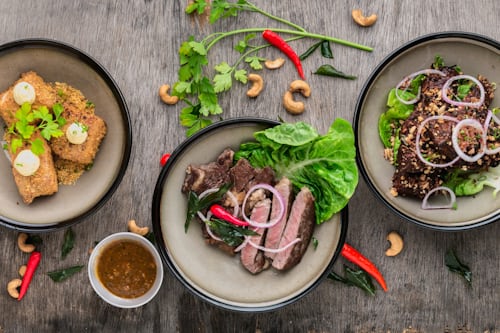
While you're sleeping, technically, you're fasting (unless you're sleep eating). Conversely, while you're awake, you're eating. Intermittent fasting can be simply defined as going without food for a longer period of time than sleep and consuming all of your calories within a specific window of time.

While you're sleeping, technically, you're fasting (unless you're sleep eating). Conversely, while you're awake, you're eating. Intermittent fasting can be simply defined as going without food for a longer period of time than sleep and consuming all of your calories within a specific window of time.
Benefits of Intermittent Fasting
Reducing calories (like you do with IF) has been shown to increase the lifespan of cells in the body. In animal models, calorie restriction can actually enhance the longevity of the animals, and limiting food intake might also fight off disease.
From
the perspective of body composition, one of the big selling points of
IF is your body's increase in responsiveness to insulin. The hormone insulin
is released in response to food. It has the effect of causing the
liver, muscle and fat cells to store glucose. In a fasting state, blood
glucose levels drop, leading to a decrease in insulin production, which
signals the body to start burning stored energy.
There are many potential benefits to intermittent fasting, including:
- Weight loss
- Improved mental state
- Increased energy
- Improved fat-burning
- Increased growth hormone production
- Lowered blood cholesterol
- Reduction of inflammation
- Improved cellular repair
Is Intermittent Fasting Right for You?
As
of right now, there's no official test to say whether you should or
shouldn't try intermittent fasting, but there are some general
guidelines. You should consider the impact on your lifestyle.
If
your IF protocol conflicts with family's nutrition needs or your work
schedule, it might be challenging to commit to an IF schedule. Or let's
say you're a performance-based athlete: You should consider your
nutritional needs, including recovery. Finally, if you're a woman,
intermittent fasting might not be right for you due to hormonal
implications.
With
any IF protocol, it's a good idea to talk to your doctor before
starting. Will you benefit from IF? Remember, just because your friend
did it doesn't mean it will work for you too. Ultimately, the only sure
way to find out if intermittent fasting is right for you is to try it
for yourself.
There
are a ton of variations on intermittent fasting, and choosing which one
is right for you is often a matter of trial and error. To get you
started, here are a few examples of IF protocols:
1. Breakfast Skipper (aka 16/8 Method)
- Fast for 16 hours, and then eat during an eight-hour window.
- This is a good protocol for those who are new to IF and would typically eat between the hours of 4 p.m. and midnight.
2. “Leangains”
- Women fast for 14 hours, while men fast for 16 hours.
- Similar to the Breakfast Skipper, but the slight decrease in fast length for women is to ensure you're not messing up your hormones, as females can be more sensitive to signals of starvation.
3. Fast Diet (aka the 5:2 Diet)
- Eat for five days and significantly cut calories for for two days.
- This is a more advanced method of fasting in which you eat as you normally would for five days, and then reduce your calories significantly (600 calories for men and 500 calories for women) for two days.
4. Alternating
- Eat one day, fast the next.
- With this diet, on the fasting days you should eat a fifth of your recommended daily caloric intake, and then consume a normal amount of calories on feasting days. This is a slightly easier protocol to follow than Fast Diet.
5. Warrior
- Fast for 20 hours a day and eat one large meal at night
- This is a more challenging protocol to follow, as you'll need to ensure you fit all of your important macro- and micronutrients into one meal a day.
There
really are a limitless number of variations on the intermittent fasting
protocol, so if you're considering IF, start with one (say, breakfast
skipper) and play around with what works with your schedule and hunger
levels.
Read more: 13 DOs and DON'Ts of Intermittent Fasting
The Impact of Metabolism and Genetics
As
with any nutrition plan, success is largely based on if the diet is
right for you. Two factors that play into this equation are your
metabolism and genetics.
Suppose
you have a fast metabolism and you're trying to build muscle. Focusing
on your calorie intake around exercise means you have lots of energy to
work out, with additional energy and amino acids to recover. If you're a
true "hard gainer" or "skinny fat," IF might help you achieve your
goals — not to mention the potential hormonal benefits.
If
you have a slow metabolism or you store energy easily, then eating all
your calories in a short space of time might make fat loss hard for you
because you will hang onto energy even in the fasting windows, so IF
might not be a good protocol for you to follow.
Genetics
is a little harder to factor into the equation unless you've had a
genetic test done, such as the one from FitnessGenes. They can tell you
whether you have a fast or slow metabolism based on your genes. For
example, the uncoupling genes (aka UCP genes) provide information to
decide if you might be someone who would benefit from intermittent
fasting.
About the Author
Dr. Dan Reardon, CEO and co-founder of FitnessGenes, is a medical doctor and genetics expert who has been featured in InStyle, The New York Times and Men's Fitness and on Inc.com, Well+Good and "The Doctors."
An
emergency-room doctor for 10 years with a degree in human anatomy, he's
also a certified personal trainer with more 15 years of experience. Dr.
Reardon has written two books and was formerly the science editor of
Muscle & Fitness and Flex magazines in the U.K., Europe and
Australia.
About Fitness Genes
FitnessGenes
is the first DNA-testing platform of its kind to eliminate the guessing
game from fitness and nutrition. With a quick DNA kit and an analysis
of 43 gene variations,
its team of genetic scientists reveals specific traits, including
metabolic tendencies, dietary sensitivities, fat-burning capacity,
muscle type, recovery time and more. FitnessGenes then prescribes
personalized, week-by-week exercise programs and nutritional guides
based on your genetic profile.


Comments
Post a Comment