


Why Michael B. Jordan Needed Therapy After 'Black Panther'
Michael B. Jordan gave the performance of his lifetime playing the role
of supervillain Erik Killmonger in the critically acclaimed film “Black
Panther” — but it took a toll on his mental health. In a brutally honest
new interview with Oprah Winfrey, he admits that investing so much of
himself into the part left him in a really dark and lonely place, and
directly after filming was forced to seek professional help.
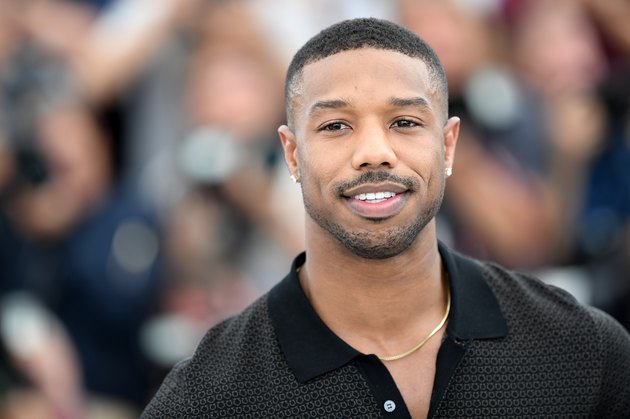
In order to get himself in the headspace to go up against Chadwick Boseman’s title character in the Marvel Comics flick, Jordan went into a personally dark place and struggled to return to his normal self. "I went to therapy, I started talking to people, starting unpacking a little bit,” he told Oprah during a taping of her “SuperSoul Conversations” TV special.
In order to get himself in the headspace to go up against Chadwick Boseman’s title character in the Marvel Comics flick, Jordan went into a personally dark place and struggled to return to his normal self. "I went to therapy, I started talking to people, starting unpacking a little bit,” he told Oprah during a taping of her “SuperSoul Conversations” TV special.
"I
was by myself, isolating myself," he continued. The media legend then
asked him where he went to "get all that nastiness" embodied in his
villainous character. "I spent a lot of time alone," Jordan responded.
"I figured Erik [Killmonger], his childhood growing up was pretty
lonely. He didn't have a lot of people he could talk to about this place
called Wakanda that didn't exist."
Like
many great actors, Jordan felt it was necessary to really embrace the
psychology behind his character, but ended up getting caught up in the
emotional journey.
"Of
course it's an extreme, exaggerated version of the African diaspora
from the African-American perspective, so to be able to take that kind
of pain and rage and all those emotions that Erik kind of represents
from being black and brown here in America... That was something I
didn't take lightly,” Jordan said.
While
Jordan “didn’t have a process” of getting into character, he did
whatever he felt “needed to do or whatever I felt was right in the
moment every step of the way.” However, as each scene ended he struggled
to find emotional closure, which became problematic.
“I
didn’t have an escape plan,” Jordan told Oprah. By the time filming was
complete, he wasn’t in a good place. "When it was all over, I think
just being in that kind of mind state... It caught up with me."
The
actors admits it “was a little tough” to get out of character and to
assimilate back into his daily life. "Readjusting to people caring about
me, getting that love that I shut out," he continued. "I shut out love,
I didn't want love. I wanted to be in this lonely place as long as I
could."
This
is why he decided to seek professional help and explains that seeing a
therapist was a game-changer, as it “helped…a lot.” “Your mind is so
powerful. Your mind will get your body past a threshold that it would
have given up on way before.”
He
also delved into the stigma attached to men and therapy, and how it is
total BS to say the least. “Honestly, therapy, just talking to somebody
just helped me out a lot. As a man you get a lot of slack for it … I
don’t really subscribe to that. Everyone needs to unpack and talk.”
While Jordan never gives a label to the mental state he succumbed to, as many as 6 million American men suffer from depression each year, and are far less likely than women to talk about it or to seek treatment. Even more troubling are some other statistics surrounded men and mental health. For instance, male suicide
is at three-and-a-half times more than the rates for women and in 2017,
white males accounted for nearly 78 percent of suicide deaths.
According to studies, there are a few main reasons why men are less likely
to seek professional mental health help than women. Some of these
include their inability to openly discuss and express emotion due to
masculine role socialization and their fear that society will look down
upon them if they do seek help.
When
these men opt against any sort of treatment, many will find that they
can't really handle it on their own and will opt to self-medicate with
drugs and alcohol, further agitating their mental state.
So
just how do we get more men to consider therapy? We need to change the
dialogue and make it honorable for men to be in touch with their
emotions. By opening up about his personal mental health struggles and
admitting that he sought treatment to deal with them, Michael B. Jordan
is doing his part to bust up this antiquated notion that real men are
“tough” and don’t need to ask for help.
While he might have played a supervillain in "Black Panther," in real life he is actually a superhero.


Comments
Post a Comment