It’s not just your
food intake that helps you reach a healthy weight — but your
sipping habits, too. “We can’t address weight without addressing health, and
part of that puzzle is hydration,”
says Melissa Majumdar, MS, RD, lead bariatric nutrition coordinator and
dietitian for the Brigham and Women’s Center for Metabolic and
Bariatric Surgery and spokesperson for the Academy of Nutrition and
Dietetics. Essentially, if your body is short on what it needs to run
properly — including adequate fluids — it’s not going to
support weight loss.
More than that,
what you choose to hydrate with matters,
and there are some small changes you can make to up your intake of the
right fluids to help move you toward your goal. Here are tips to keep in
mind:
There’s an old adage that you should drink ice water to
bump up your metabolism.
Past studies looking
at that have found the calorie-burn required to heat the water to body
temperature wouldn’t make enough of an impact to change your weight in a
manageable way. A better aim is to determine what temperature you like
your water at so you’re more likely to drink more of it, says Majumdar.
Keeping a water bottle at your desk is a great
strategy for drinking more. Plus, if you take a walking break to refill it regularly you can
get in some added steps.
Another pro tip: People tend to drink more when it’s out of a bottle
with a spout or (reusable) straw, rather than a screw cap, says
Majumdar.
Another common bit of weight-loss advice is to down some water before
a meal to “fill you up.” That might have some basis in reality.
According to a 2015 study in the journal
Obesity,
drinking 16 ounces of water 30 minutes before a meal helped
participants lose about three more pounds compared to a control group.
“If you are hungry, you should eat — not drink. But having water before
eating can help you stop and first check in on your thirst,” says
Majumdar. This critical pause
may make you more mindful and in tune with why you’re eating, if it’s for
physical hunger or out of
stress, habit or boredom.
Surprise — both
coffee and tea count toward your hydration needs, says Majumdar. For one,
research shows
coffee doesn’t actually dehydrate you (turns out, the liquid offsets
any diuretic effect of caffeine). Two, caffeine intake has been
associated with a lower BMI and body fat, per a meta-analysis review in
2018 in
Critical Reviews in Food Science and Nutrition. However, it’s important to
track what goes into your coffee — black or just a splash of milk contains far fewer calories and added sugar than a mocha with whipped cream.
Just 30 and 34% of water consumed for men and women, respectively, is plain water, according to the
CDC. If you find the plain stuff boring,
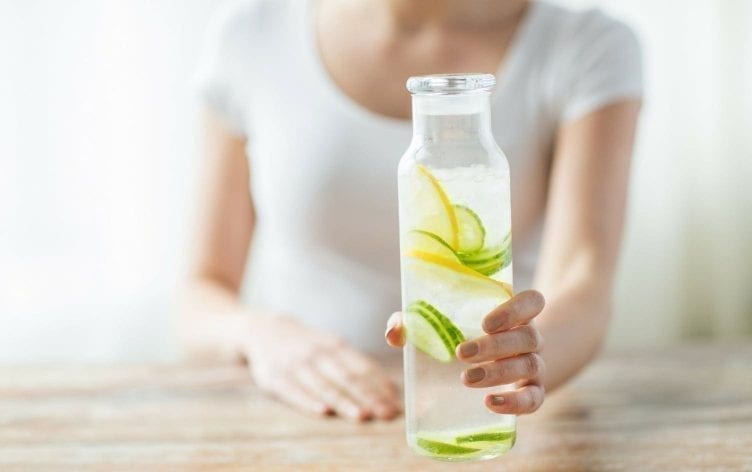
add a light hit of flavor with things like melon balls, berries and basil, pineapple and mint or frozen watermelon cubes.
A
well-publicized study last year sounded the alarm on all those
trendy sparkling waters —
the carbonation can scramble hunger signals to cause weight gain, it
suggested. However, this study was done on rats. “We can’t generalize
recommendations based on one study, especially if it’s animal-based, as
it needs to be repeated with randomized-controlled human trials,” says
Majumdar. Meaning: If you find sparkling water helps you stay hydrated
throughout the day, there’s no reason to skip it out of fear of weight
gain.
It’s no surprise
sugar-sweetened drinks dump a lot of
added sugar and
calories into your diet. So, you’re best served ditching this habit.
Exactly how is more difficult, but you’ll set yourself success if you
have an idea of your personality. “For some patients, if they have some
soda, they want more, so they go cold turkey. For others, they are
better
setting incremental goals,
which allow them to build confidence while hitting milestones,” says
Majumdar. For the latter approach, if you start off with four sodas a
day, this week you might try three sodas a day with the aim of being
completely off of it in a month, for example.
Don’t stop at beverages when it comes to hydrating.
The National Academy of Sciences says
you can meet 20% of your fluid needs through food. That’s difficult to
quantify, says Majumdar, but it does give yet another reason to pack
your diet with
water-rich fruits and vegetables, which contain filling H2O and
fiber.




Comments
Post a Comment