


Can Walking on the Treadmill Tone My Legs and Butt?
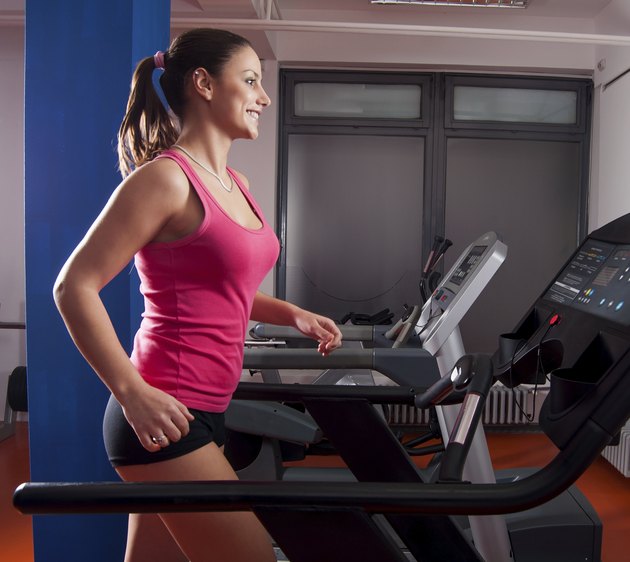
Walking
is good exercise that almost anyone can do. Even overweight people or
those seriously out of condition can walk at least a little. Walking
helps shed pounds, improves cardiovascular fitness and builds or tones
muscles. Walking on a treadmill can be as good as walking outdoors and
is something that can be done year-round without interference from
weather. All gyms, fitness centers and many homes now have treadmills.
Walk Normally
Even
when first starting to walk on a treadmill, set the incline at slightly
above flat, to compensate for the lack of wind resistance. Walk
normally but hold the handrails if stability is a problem. Build up to
walking without holding on, as arm movements will make the walking
stride more normal and improve the cardio benefit. Walk slowly until you
adapt to the moving tread; then gradually increase your speed. The
normal gait on a relatively flat surface will target all of the muscles
of your legs and your butt. Toning with this exercise will depend on how
many times a week and how long you walk. A suggested schedule is five
to seven days a week at a speed of 3.0 minimum for 30 plus minutes.
Change Incline
Raise
the incline to get maximum benefit for your quads and butt. The action
of stepping up will work those muscles more, helping make the legs and
buttocks firmer. It's best to vary the incline. Start slowly with a low
level and gradually step it up. Walk at the maximum height only for
short periods to allow muscles to recover with a more gradual slope.
Vary Speed and Stride
Vary
the speed so your muscles don't adapt to just one pace. Work out at a
comfortable, "normal" pace at which you can walk easily. Use that as
your base and vary the intensity up and down from that base level.
Lengthen strides when you increase the incline and shorten them when you
work back down. Concentrate on your walking for maximum toning; focus
on your stride rather than a television screen.
Walk Backward
Walk
backward at intervals, for short periods, to simulate a downhill walk
that works the back of your legs, hamstrings and calves. Try
side-stepping at times, if you can do it comfortably, to work the inside
of your legs. Don't do the same workout every day; make a plan that
calls for long, slow walks one day and shorter, more intense walks the
next.


Comments
Post a Comment